
智联招聘
美国很慌!华盛顿终于发现了:没有中国点头,美军根本打不了仗,元衡防务,原创 美国很慌!华盛顿终于发现了:没有中国点头,美军根本打不了仗,一纸禁令倒逼军火商叫苦,稀土命脉紧攥于中国之手,砸钱难填产业链的深坑_我的网站

A | 2026年的秋季,五角大楼那份被反复翻动的关键材料清单,成了华盛顿最头疼的东西。

B | 清单一页页排下来,钕铁硼磁体、钨、钽、钼、钐、镝、铽,几十种美军尖端武器绕不开的原料,追根溯源,供货方向几乎都指向同一个坐标:中国。 距离2027年1月1日的国防采购禁令正式落地只剩下四个多月的窗口期,华盛顿这才恍然大悟,规则可以自己定,可原料的开关却在别人手里。 追根溯源,这道压在美国国防承包商头上的紧箍咒,来自2023年通过的《国防授权法案》第八百五十四条,也就是美国联邦法典第10卷第4872节。
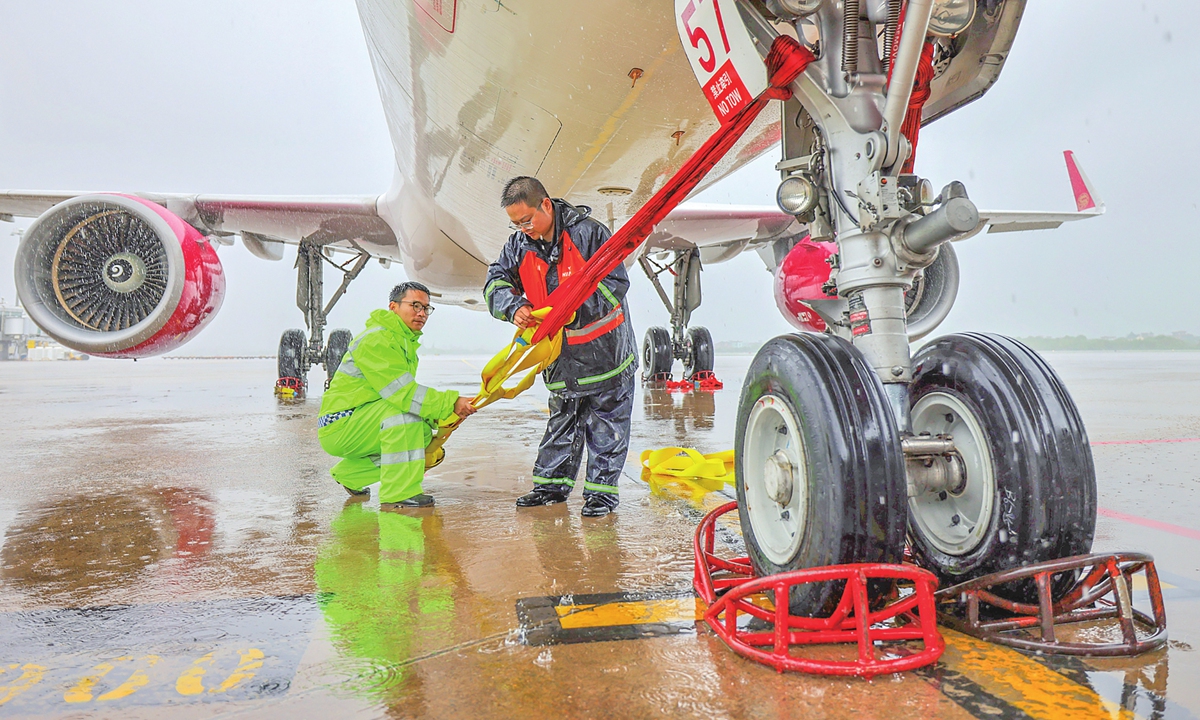
Typhoon Dolphin made landfall in Taizhou, East China's Zhejiang Province, on Sunday afternoon, bringing strong winds up to 42 meters per second and heavy torrential rain to the coastal regions amid a red alert - the highest level in the country's typhoon warning system - issued for it earlier that day.
Authorities in East China's Fujian have relocated nearly 100,000 residents, while coastal provinces are suspending railway services and canceled flights, making an all-out effort to mitigate possible risks.
The NMC maintained orange rainstorm and blue severe convective weather alerts at 6 am on Sunday, forecasting exceptionally heavy rainfall of 250 to 440 millimeters in some areas along the eastern coast of Zhejiang, with heavy to torrential rains expected across Jiangsu, Zhejiang, Shanghai, and Anhui between Sunday morning and Monday morning, China Central Television (CCTV) reported.
In response to the typhoon, China's meteorological authority on Sunday upgraded its emergency response for severe meteorological disasters from Level III to Level II.
Fujian raised the emergency response level for typhoon prevention to Level II at 9 am on Sunday.
As Typhoon Dolphin gathers strength and approaches the coastal areas, Fujian's flood control authority, as of 6 pm on Saturday, deployed a total of 17,800 officials to and relocated 98,900 people from high-risk areas, Xinhua News Agency reported on Saturday.
Fujian has suspended all 115 marine engineering projects and moved 290 construction vessels to safe waters, while 55 passenger ferry routes in affected waters have been halted, chinanews.com reported.
Meanwhile, railway services in the affected regions including Fujian, Zhejiang, Shanghai have also been suspended from Sunday to Monday, according to chinanews.com.
Fujian authorities have urged stronger safety measures for returning vessels, offshore platforms and coastal and island tourism, as well as reinforcement of aquaculture facilities. They also called for timely evacuations from flood- and landslide-prone areas to guard against secondary disasters from the typhoon and heavy rain, chinanews.com reported.
In Zhejiang, Wenzhou city has closed all 85 A-level national tourist attractions, turned away more than 7,400 visitors and evacuated over 1,600, with the relocation effort ongoing, according to CCTV. Next, Wenzhou will next implement a "five suspensions" policy, halting outdoor group activities, classes, work, business operations and transportation.
All fishing vessels at Shitang Fishing Port in Wenling, Zhejiang, have returned to port, with all personnel evacuated ashore and maritime rescue teams on standby. Authorities urged vessels to stay off the sea during the typhoon.
In Shanghai, Pudong and Hongqiao airports operated at reduced capacity on Sunday, with nearly 60 percent of flights canceled. A total of 1,384 flights are scheduled to be canceled including 871 at Pudong and 513 at Hongqiao. Passengers are advised to check with their airlines for the latest updates and adjust travel plans accordingly, according to CCTV.
According to Hu Xiao, meteorological analyst at the NMC, the typhoon has several notable features, including its strong intensity and expansive circulation. The typhoon also has several unusual features. Forming unusually far east, near 180°E, it has traveled more than 7,200 kilometers, making its potential landfall in China a rare event and possibly the easternmost such landfall since 1951. Its 12-day lifespan is also well above the typical seven-to-10-day average, CCTV reported.
According to Ma Jun, director of the Institute of Public and Environmental Affairs, Typhoon Dolphin traveled a long distance and remained at typhoon or severe typhoon strength of its lifespan so far. Despite passing through some areas that were unfavorable to its development, its powerful inner core remained intact, while its extensive cloud system continued to absorb moisture and energy, fueling the potential for torrential rainfall.
The typhoon has remained at sea for more than 260 hours and experienced a rare "three rises and three falls" in intensity. Its unusually long lifespan has allowed it to absorb more moisture and energy, while repeated intensity fluctuations have complicated forecasts of its future track and intensity of wind and rainfall, according to CCTV.
After landfall, Typhoon Dolphin may move slowly, prolonging heavy rainfall and raising the risk of extreme precipitation and related disasters. Its track later in the week remains uncertain as it could interact with the southwest monsoon and cold air from the northwest, potentially broadening and intensifying its impacts, Ma told the Global Times on Sunday.
。 美国国防部据此在2024年5月30日的《联邦公报》上落笔盖章,形成了国防联邦采购条例补充规定252.225-7052号条款。 条款白纸黑字地写着,从2027年1月1日起,任何国防承包商都不许再交付任何在中国开采、精炼、分离、冶炼或者制造的钕铁硼磁体,含有此类磁体的最终产品也一概不允许交付。除中国之外,俄罗斯、伊朗、朝鲜同样在受限名单里。 国防部当时在公告中就明确讲了,这个截止日期是国会通过立法定死的,行政部门想改也没法改。按理讲,从2023年动笔立法到2027年正式生效,中间的过渡期长达三年多,够美国军工企业慢慢腾挪、从容布局。 但眼下的情形却截然相反。据咨询公司Arthur D. Little向路透社透露的一组测算数据,2025年美国国内对常用稀土永磁体的年度需求约48000吨,而本土产量只有300吨,落差整整有一百五十倍以上。 即便把目前所有在建的美国磁体工厂全部纳入盘算,到2026年年底本土产能大概也只能爬升到5000吨这个量级,跟军工加民用的实际胃口相比还差着一大截。 特朗普于2026年7月20日签署行政令,命令新更名的“战争部”堵住承包商继续从对手国家采购关键材料的口子,并且要求企业按零部件级别把整条供应链摸清楚上报。 行政令还专门戳中了国防工业的软肋,批评承包商长期以来“轻视本土生产与韧性”,并且明令从2027年1月1日起,战争部长将默认停止签发豁免。 承包商如果非要例外,就得递交一份完整的缓解计划,把自己已经穷尽了哪些国内寻源努力、计划如何切换供应、时间表怎么排都交代清楚,"找不到本土货源"这个理由从此不再成立。正因为如此,一大批美国军火商彻底坐不住了。 英国《金融时报》2026年5月18日援引多位知情人士的说法披露,一批国防承包商开始集体向白宫和国防部游说,希望白宫能把禁令的执行日期往后挪一挪。全球的稀土磁体版图里美企本来就分得一小杯羹,短时间内根本没法把中国货换掉。

C | 稀土在美军武器体系里究竟有多重的分量,有分析人士指出,一旦中方在稀土磁体和相关合金上稍微一收紧,洛克希德·马丁公司的F-35战机所配的AN/APG-81雷达就会出现关键组件短缺。 洛克希德·马丁公司自己在2026年8月给美联社的一份声明里回应称:“我们持续评估全球稀土供应链,确保支撑客户任务的关键材料能够到位。” 国际能源署此前发布的《全球关键矿产展望》给出过一组硬数据。

D | 中国把控着全球约91%的稀土精炼产能和约94%的磁体制造份额。 这个占比意味着,即便美国、澳大利亚、加拿大手里都攥着稀土矿石,可只要缺了精炼分离和磁体加工这两道关口,矿石就变不成能上武器装备的零件。

E | 美国政府问责局早前也承认,美国国防部登记在册的一级、二级、三级供应商加起来超过20万家,可涉及原料具体产自哪里,很多情况下相关部门都掰扯不清楚。除稀土之外,清单上另外几种关键金属的处境更加尴尬。 美国本土从2015年往后就没再规模化产过钨,而钽的最后一次商业化生产还得追溯到1959年。 目前Patriot Critical Minerals Corp.计划到2028年前重启美国钨矿开采,其首席执行官Brodie Sutherland在2026年8月初接受美联社采访时坦承,美国100%依赖进口,中国掌握全球约80%的钨矿开采份额和更大比例的下游加工份额,美国本土要提升产能得用好几年时间,在此之前五角大楼和承包商只能靠现有库存、加大回收和有限的非中国来源勉强撑着。 中方的反制招数也在不断加码。2025年4月,中国商务部对钐、钆、铽、镝、镥、钪、钇等七类中重稀土及相关物项启动出口许可管理。 2026年6月22日,中国商务部依据《两用物项出口管制条例》第二十八条发布2026年第23号公告,把包括MP Materials Corp.和USA Rare Earth, Inc.在内的十家美国实体列入出口管制清单。 公告的措辞非常严厉,全球任何国家或地区的组织和个人,都不得将中国原产的两用物项转让或者供应给上述实体。这一条等于把美方寄予厚望的两家旗舰稀土企业直接从中国供应链上摘了出去。 俄罗斯塔斯社2026年3月的相关报道里也讲,全球目前只有中国拥有完整的稀土金属生产周期,从开采、冶炼、分离到金属化、合金化再到磁体制造无一缺项,美国在能预见到的未来仍然绕不开这条产业链。 面对军工圈的集体哀嚎,特朗普政府的态度反倒越绷越紧。

F | 除了2026年7月20日签署的第14415号行政令之外,白宫方面还砸下了大把真金白银。 美国商务部于2026年1月宣布,计划向美国稀土公司注资约16亿美元,其中包括约2.77亿美元的股权投资和约13亿美元的担保贷款,用于支持位于得克萨斯州的稀土矿山和俄克拉何马州斯蒂尔沃特的磁体工厂建设。 到了2026年4月20日,美国稀土公司又抛出一份约28亿美元的收购协议,把巴西的Serra Verde集团收入囊中,试图从上游矿源到下游磁体拼出一张完整的产业地图。

G | 当年2月,美国政府启动的“Project Vault”关键矿产储备计划规模高达约120亿美元。可就在项目开跑之后的4月份,美国官员就向路透社坦承,短期内要把库存建起来,仍然得“从全世界任何地方”买货,也包括中国。 稀土这个行业不是砸钱就能立刻见效的赛道。

H | 从勘探开矿、分离提纯,到金属化、合金化、磁体加工,每一步都得靠时间和技术慢慢往上垒。 美国稀土公司在得克萨斯州的矿山按现有的进度算,真正投产也得排到2028年往后,而这还不包括后端磁体制造达到军工级稳定供货所需要经历的漫长验证周期。 一位美国稀土产业的内部人士曾对路透社丢下这么一句话:中国用了几十年功夫搭建起来的完整体系,美国靠几十亿美元的补贴,一两年内根本复刻不出来。 回到那份让华盛顿夜不能寐的清单,它讲的其实是一个再朴素不过的道理。现代战争打的从来不只是武器平台的花架子,更是背后整条产业链的稳定与自主。

I | 中国之所以能在稀土这张牌上稳坐主动位置,靠的绝不是运气或者资源禀赋的一时之利,而是几代人在冶炼、分离、金属化、磁体制造等每一道工序上的技术积淀和产业深耕。 只要中国在稀土精炼和磁体制造上的领先优势还在,美国军工体系对这条供应链的依赖就没那么容易在短期内摆脱。

J | #上头条 聊热点#返回,查看更多。

K |
Current article:http://lmtk.panningbuquanchencaibingzhang.cyou/995/fsi.html
Published on:10:34:43
成吉思汗_Random reading
- 08-25台风黄色预警持续 “紫檀”将登陆粤桂沿海 “沙德尔”向浙闽靠近
- 08-20共筑防线 共享机遇——2022年国家网络安全宣传周观察_活动_新华社
- 08-22男子错过服务区下高速充电,跟着导航找到一被杂草覆盖的充电桩,扒开草发现竟然还能用;当事人:怕着火,只充了20%就匆忙离开
- 08-23官宣!2028洛杉矶奥运会开闭幕日期公布
- 08-22美国友人“赛考斯”时隔20余年重返中国:我回到了我的第二个家
- 08-26湖南黄金:拟购买黄金天岳及中南冶炼100%股权,股票复牌
- 08-20Redmi Red Rice Note7手机完整版库存
- 08-21展现稳定性!挪威俱乐部博德闪耀连续两年晋级欧冠正赛
- 08-25Scientists develop new Covid strain with 80 pc kill rate in mice
- 08-22【观点】广州期货:生猪现货走弱,维持谨慎看多观点

锵锵三人行_Active users
- 小米米家电动剃须刀:环抱锁须结构、双环波纹刀网,199.75 元
- 高温和干旱冲击欧洲电力供应系统
- China launches Zhuque-3, achieving its first rocket recovery on land
- 国安部披露一起泄密事件
- 小高和刚自曝蜕皮变美少女 起因竟是脚趾磨破皮
- 서울시, 9월 수도요금 체납 집중정리…55억 규모
- 苹果 iOS 16 已支持检测假冒 AirPods,iPhone 弹窗提醒不要连接_用户_消息
- The West’s ‘overcapacity’ narrative is economically illiterate: Josef Gregory Mahoney
- 【东城中心幼儿园·工会】新岁启封·同赴新程
- 因凡蒂诺:没特朗普就没这届世界杯的成功
- 《It Ends》评测
- 汉密尔顿:梅赛德斯让车指令非常果断,法拉利就没这么做
- 新政府重拳打击犯罪,囚犯将大幅增加,但监狱里住不下了……
- 韩国:一场锂电池着火引发的“互联网大瘫痪”
- 能源金融交叉研究的前沿探索和有益尝试
- (经济观察)算力也能“存”和“买” 中国探索“算力银行”“算力超市”,(经济观察)算力也能“存”和“买” 中国探索“算力银行”“算力超市”
- 中美将开启新一轮大熊猫保护合作
- 小鹏G7将于7月3日上市 预售价23.58万元 CLTC纯电续航702km
太极张三丰_Hottest this week
- 08-22王庆海主持召开市政府全体(扩大)会议
- 08-25DC fixed Oct 31 for hearing arguments on the bail application in the money laundering case against Satyendar Jain
- 08-24中消协发布消费提示:使用人工智能服务需谨防误导!
- 08-26Hema Malini and Esha Deol Will Hold a Prayer Meet for Dharmendra After His 90th Birth Anniversary
- 08-26自动门挡不住鸽子?鸟儿仍闯入碗碟回收处觅食
- 08-22康桥·党建|巧手传清廉 廉政进校园 ——康桥学前教育集团2024学年第一学期党工团清廉活动
- 08-21PM releases Rs 16K cr under 'PM-Kisan' fund
- 08-26見る機会の減った「2000円札」が12万5000円に大化け!これから“さらに価値が上がりそう”な紙幣とは?
- 智联招聘 copyright
- Some of the content comes from the Internet. If you have any offence, please raise it.